Skip to Content

Unofficial Partner

Latest Posts

Funny haha or funny peculiar?

"Analysing humour is like dissecting a frog. Nobody laughs and the frog dies." Barry Cryer, by way of E.B. White.

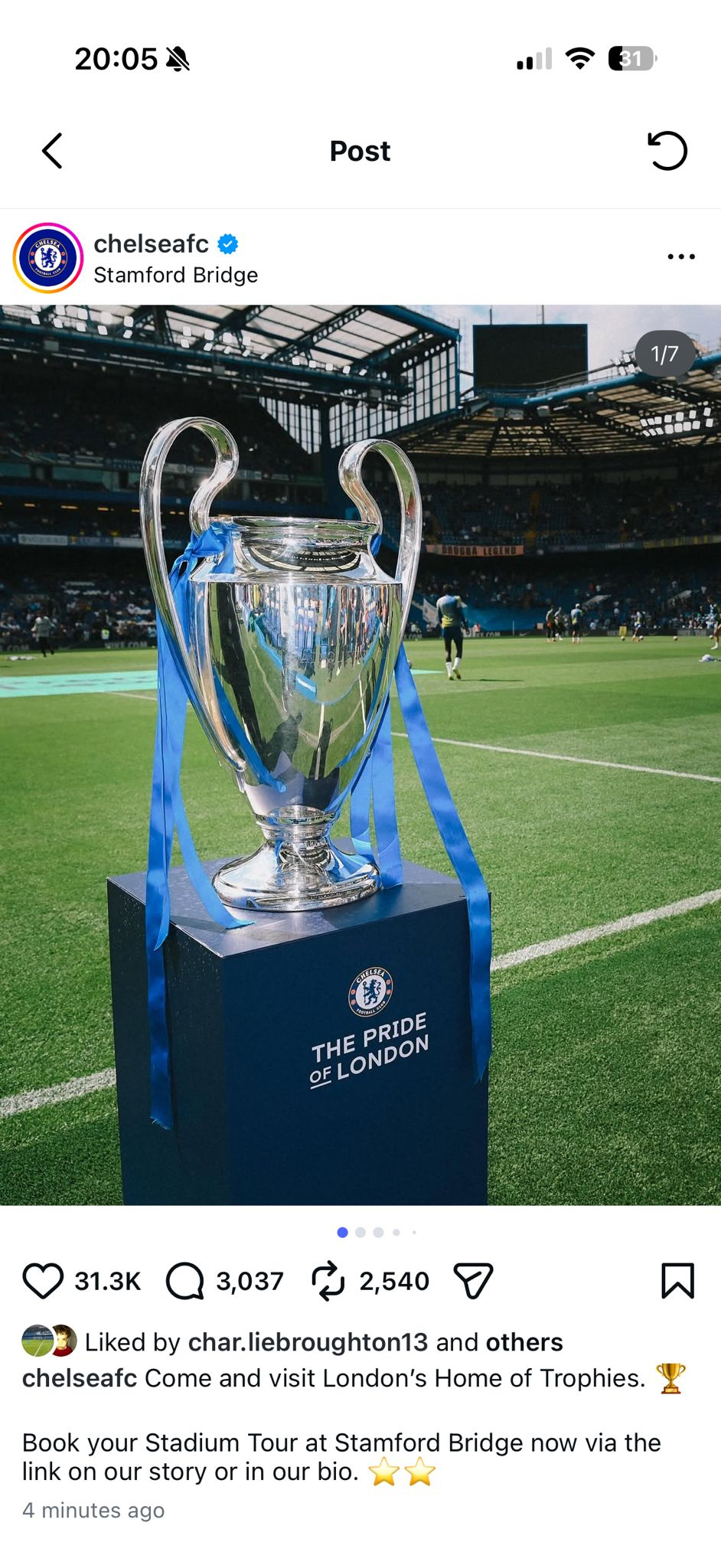
Chelsea's social team put out some #bantz in the moments after Arsenal's lost the UEFA Champions League final penalty shoot out.

It did the job, if the job was irritating Arsenal fans and making Chelsea look a bit small.

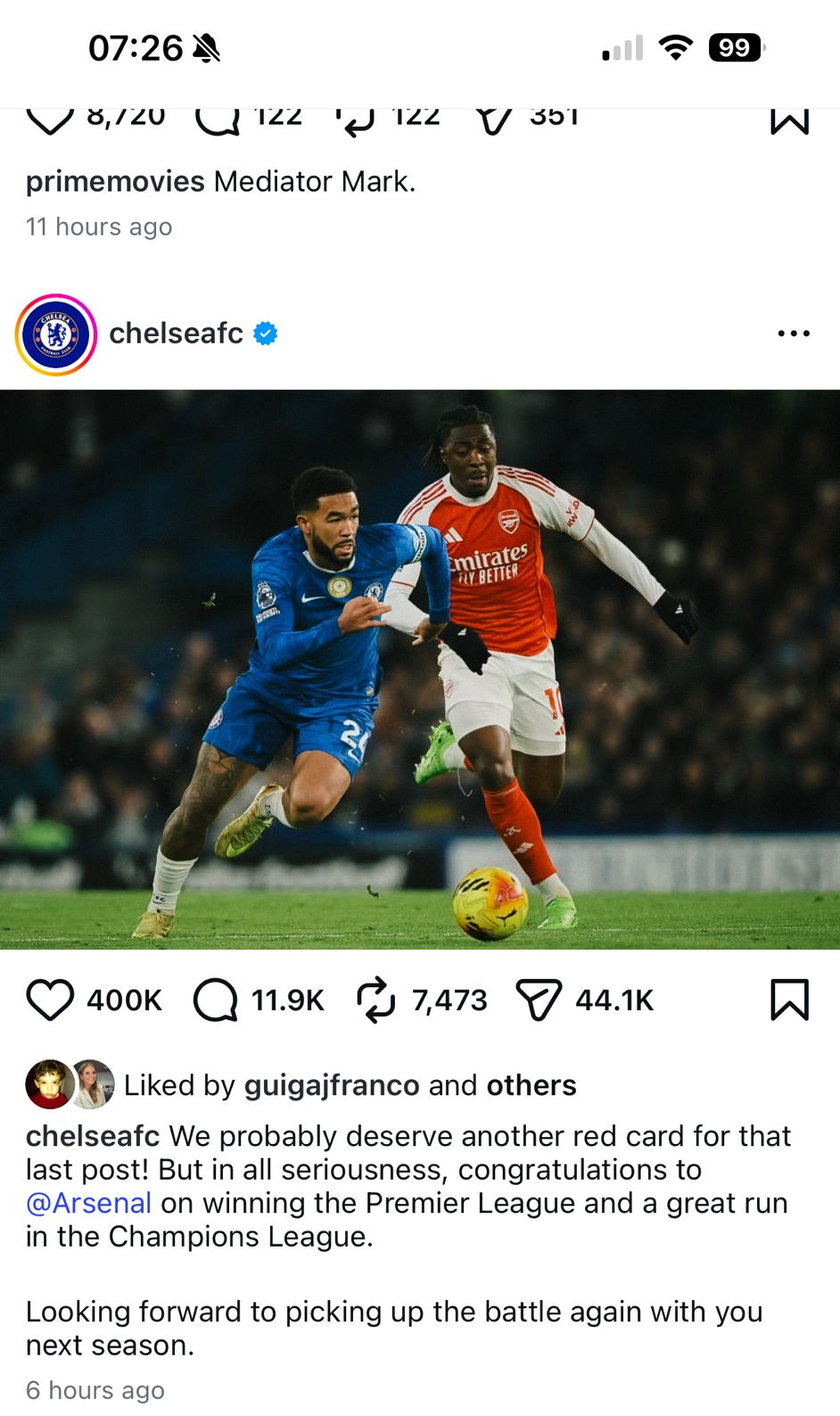
A while later, the fun police got hold of Chelsea's social account and posted an apology.

Like Richard Nixon...(bit of an overreach but bear with)...the apology was more revealing than the initial 'crime'. Between the two posts, the joke and the apology, lies Chelsea's tone of voice, which is odd because it's quite a big gap.

The uncreative path to Chat_UP's visual identity

We created Chat_UP as our bit of the AI conversation.

One of the fun jobs is to give the thing a visual identity. Something that will show up across social channels and in to live events.

Because Chat_UP is about AI, it felt right that the process start in Claude, my fast idiot assistant, which has a Canva skill connected. This should make the process quick and efficient, but actually poses more questions, which is sort of where we are with the models, which are pushing us to work harder to clarify what we mean. This process is in itself makes us better at articulating what we want, and what the actual problem is that is being solved.

In this case, I wanted something that talked to...what exactly?

Quite quickly I got to noodling around the topic of metaphors for AI. John Naughton, unsurprisingly, was way ahead on this topic. His mind went to 1993.

That was the spring when Marc Andreessen launched Mosaic, the first graphical web browser, and suddenly the world understood what this “internet” – that had been up and running, apparently unnoticed, since January 1983 – was for! The appearance of ChatGPT in late November 2022 promised a similar shift: suddenly the world realised that this is what “AI” is!
ChatGPT was the first instantiation of AI that most people encountered, and it’s still what most of us regard as “AI”, much as they once learned to refer to internet search as “googling”. It’s a chatbot, a large language model (LLM) equipped with a conversational interface. And it came as a shock to its early users. As Terrence Sejnowski, an AI pioneer, put it: “A threshold was reached, as if a space alien suddenly appeared that could communicate with us in an eerily human way.” Some aspects of their behaviour appear to be intelligent, “but if it’s not human intelligence, what is the nature of their intelligence?”
In order to answer this question, users have inevitably fastened on to metaphors as the way to tether the abstractions of artificial intelligence to more tangible things.

I like 'tether the abstractions'.

Naughton lists ten common AI metaphors, from Stochastic Parrot to Cloud and Asbestos (from Corey Doctorow of Enshittification fame).

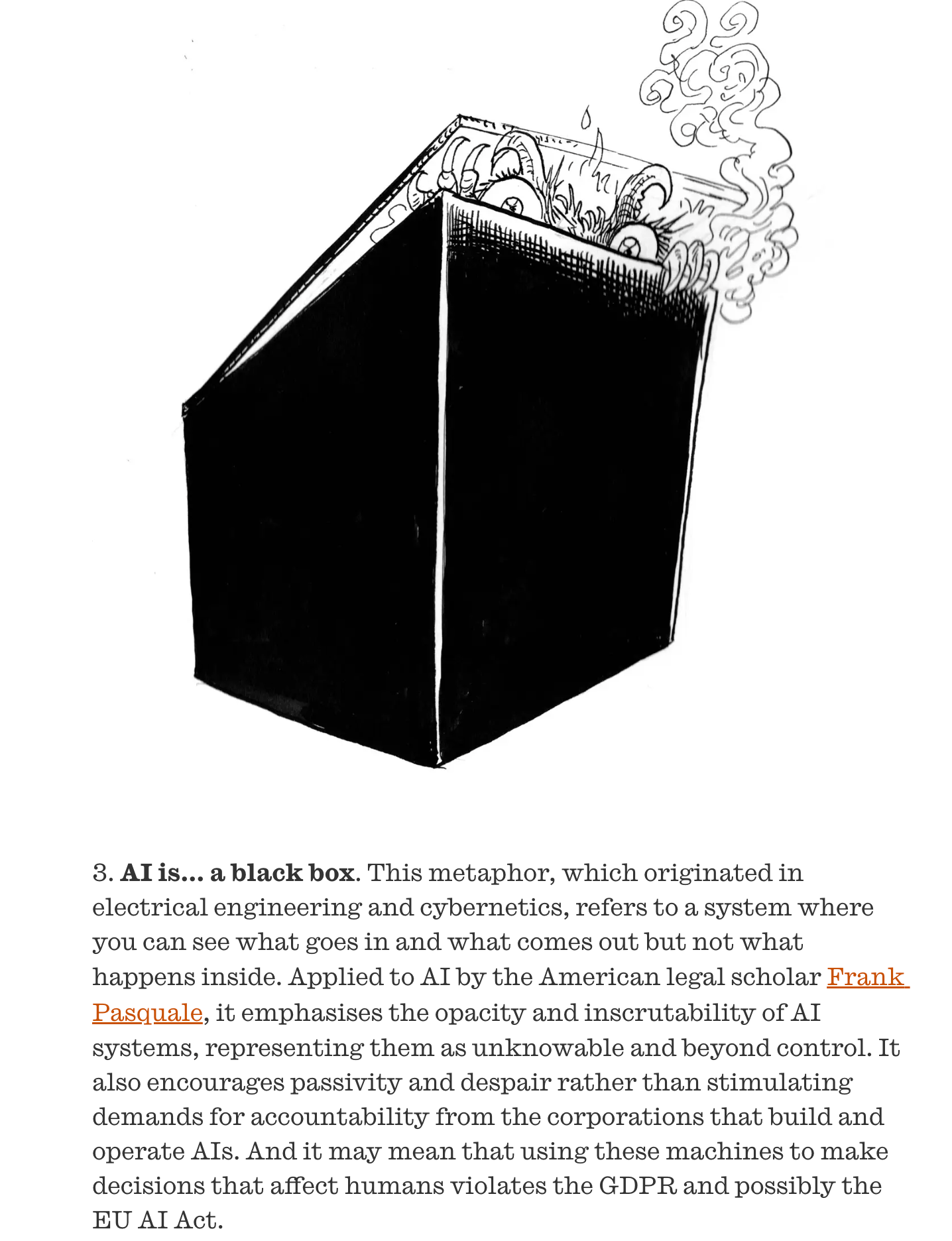
My favourite is Black Box.

Update:

AI as god

https://vm.tiktok.com/ZNR7CcJtX/

The lesson of Buzzfeed

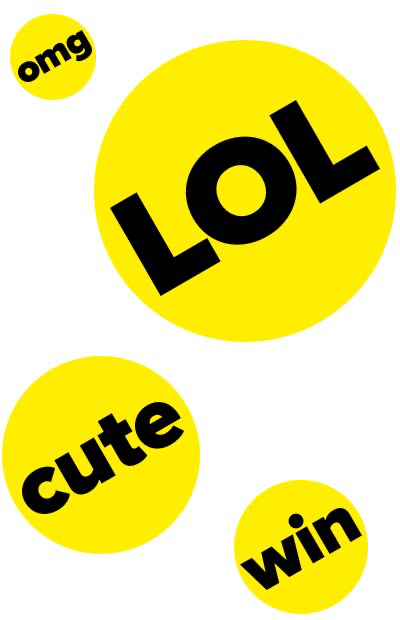
For a few years in the 2010s my iPhone case had a yellow sticker with LOL written on it. I'd appeared at a conference with a woman from Buzzfeed, when Buzzfeed was the darling of media industry, whose business model suggested a way forward for news beyond the platforms; that's how long ago this was. Anyway, we were in the green room and she put some of their emoji stickers on a table and me and the rest of the people in the room descended on them, pretending we'd give them to our kids but knowing full well it was us, the ones who should know better, who wanted the association.

That was then. And Jen Topping has written a good bit on the meaning of Buzzfeed to today's media companies in her excellent Business of TV newsletter.

I'm wary of lessons, which is funny cos I was a teacher. But park that. I just think it's rare that the success or failure of one thing is directly useful with another thing to the extent that Thing 1 can be used as the model or proof of concept for Thing 2. Let's give this sceptism a name: the Drive to Survive of Everything, or something along those lines.

But this needs a slight clarification, to do with closeness. Drive to Survive itself was successful due to F1, Covid, America, drivers in helmets and probably a few other very specific factors. The further you move from that specificity the risk of failure rises quickly.

That said, this feels true in the YouTube era:

Firstly, and most obviously, be wary of investing and building a business based on any sort of assumption that a tech company’s strategy will remain the same, or that they will remain aligned with the success of your business.

Reading Convenience Store Woman while loafing in Japan

I read Convenience Store Woman while touring Japan, as it was the most obvious thing for a lazy pseudo intellectual to do (touring Japan suggests this was more than a holiday, which it wasn't. At least I didn't say 'travelling in Japan', like a gap year student, we can at least give me that).

Keiko is the woman in the title, she's 36, single and has worked in a 7-11 ish type shop in Tokyo for her adult life. The question the book asks is a good one: what is normal? Keiko's oddness - single, a permanent rather than temporary shop worker - disarms her friends and family. They want to put her in a box that's a familiar shape: marriage, children, career. She doesn't fit these boxes. There's a shift in the book when she invites the herbivore man from work to cohabit in her tiny flat. She does this not for any affection toward him but to change her identity as viewed by others. She is now able to be 'projected upon' as more normal, more like them. Less other. By living with someone she's more easily understood. Not actually understood, but enough to fit in to a recognisable story others want to have of her.

'Now everything about the new me was clear, even my future. They seemed to have the story wrapped up between them. It felt like they were talking about a total stranger. This single piece of information unlocked the door to their world, I was for the first time, part of their circle. Until now they'd seen me as an outsider.'

Her friends and family don't really need or want her to be happy, they want or need her to be legible. 'they didn't care about me, but the shape I was supposed to make. I was a piece in a pattern that didn't fit, and it was the pattern they were trying to fix, not me.

If we want to get theoretical, Durkheim has thought long and hard about this, defining deviance as 'not by harm but by its challenge to social consensus'. There is a hidden curriculum of social life, where norms act to maintain collective solidarity. These are not taught explicitly but are enforced rigorously.
AI is the new betting, which was the new tobacco

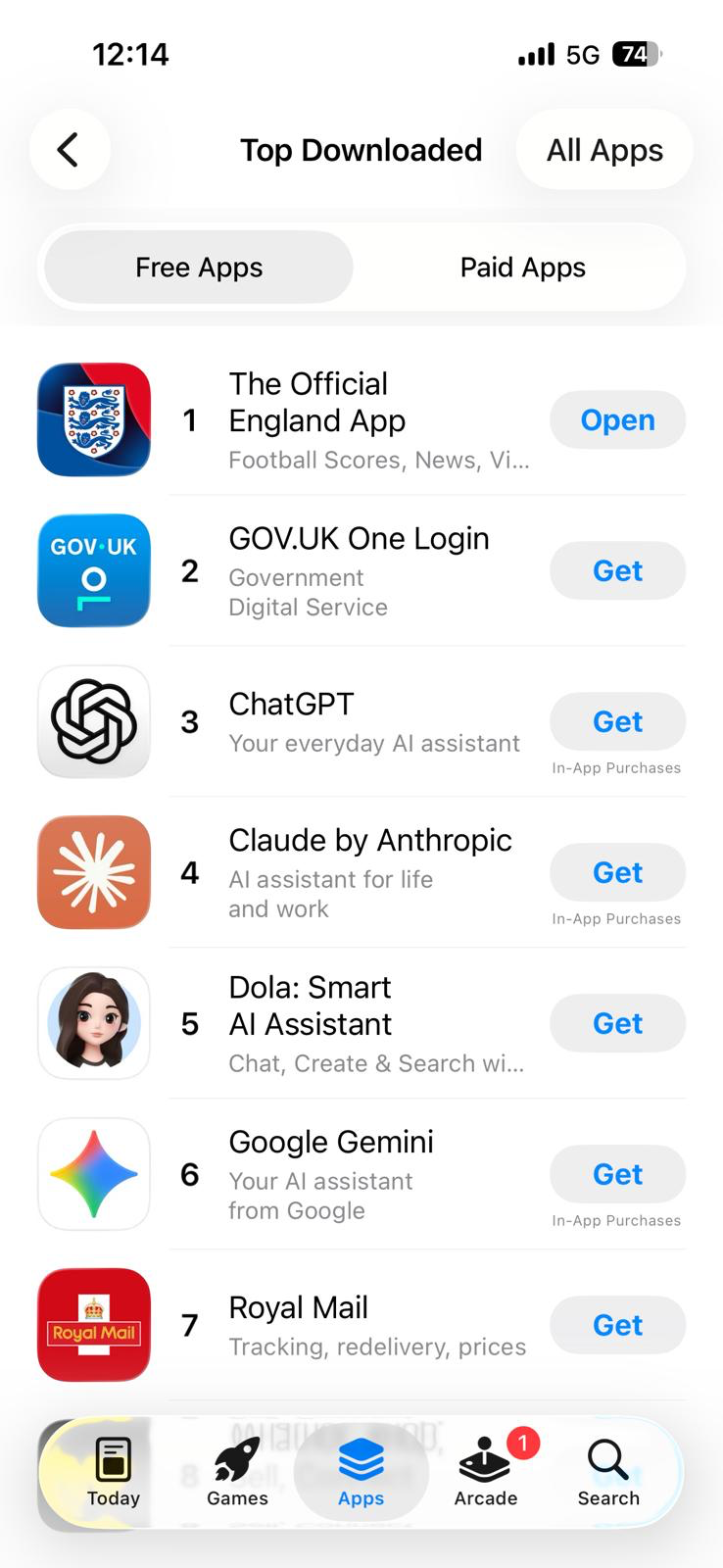
A story is building that AI is the next era defining sponsorship category.

The dream scenario for the sports sector is that this is true.

It has the characteristics required.

Undifferentiated brands backed by vast sums of OPM.

So, forward five years.

Two thirds of Premier League shirts carry AI brands.

Cue rumbling from legislators about the dangers of AI to children and mental health.

I'd model a ban by 2035.

By which time any societal harm inflicted will be baked in. The money will be in the sports 'ecosystem' and the next big category will emerge. It's a circle of life thing. Cue Lion King gif.