Variety reports on the pressure to get brands in to the live feed. A story as old as advertising has existed.
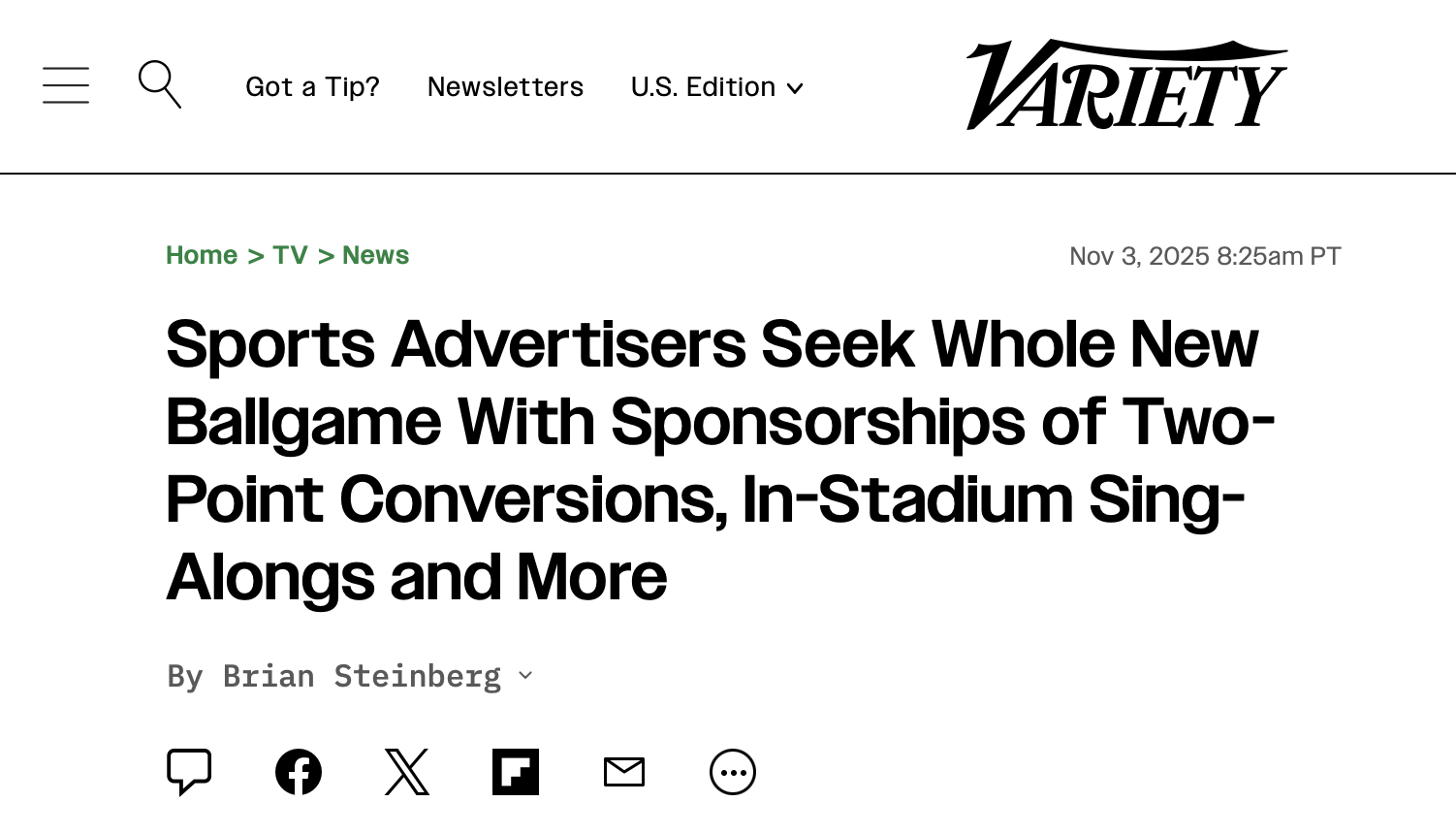
Whether this is a story or a non-story rests on whether you think the media side has the strength of will to defend the integrity of the product now.
We're in a weird time, when nobody is happy. TV viewers, sports fans, music buyers...everyone is pushing back on the over- commercialisation of their thing.
Just this week, we've had the same story appear in a different guise, this time on cringeworthy product placement in Netflix's hot rabbi romcom:
And if you venture deeper into the weeds, the same story again, this time with an AI coating:
 Nate
Nate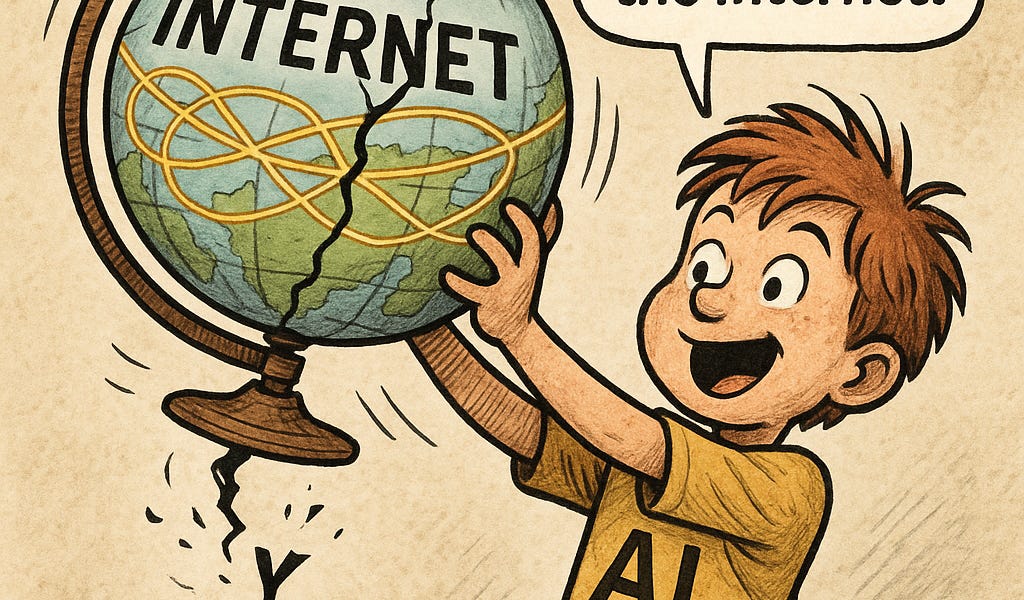
Each of these three stories are about the deep worry on the brand side that their route to the consumer is blocked.
In each case the answer is a variation of make my logo bigger.
Meanwhile, the consumer pays twice, once with money, then again with their attention and the irritation at having their thing covered in ads.
But who pays for the content if the ads don't work, is the cry.
The answer is obvious, but one that nobody on the publisher side wants to hear: Control costs. Stop overpaying for talent. Grow a pair.