Sponsors and their agencies are confusing vitality with effectiveness.
Aka, we need to talk about vibes, what they are, and what is their impact.
Some material from our podcast. Transcript here:
Vibes v Effectiveness: 'Cultural relevance is this generation's brand purpose'
Unofficial Partner podcast.
06-10-2026
Richard Gillis in conversation with Mike Grumbridge and Peter Wilson, Sid Lee Sport
Off the back of Mike Grumbridge’s Marketing Week piece, “Stop confusing vibes with sponsorship effectiveness”, a conversation about the World Cup’s “unofficial winners” narrative and what it leaves out: access, measurement, the creator economy and why so much of it is starting to look the same. Edited for length and clarity.
Richard You wrote a piece for Marketing Week, Mike, under the headline “Stop confusing vibes with sponsorship effectiveness,” which caught my attention: “The rush to crown unofficial sponsors as the winners of the FIFA World Cup risks overlooking the commercial value of access, rights and long-term sponsorship investment.” Let’s use that as the way in. We’re not going to talk about the World Cup the whole time, but it’s a useful route — it’s been the big moment of the summer. Take me into it. Give me your brief précis.
Mike It was probably a reaction to my LinkedIn feed post-World Cup, as I’m sure it was for a lot of people — the whole narrative from the sports marketing and creative industry celebrating campaigns of all shapes and sizes. Some brilliant, some less so. But celebrating one sole part of those campaigns: the vibes, the degree to which they felt culturally relevant, which is one of the industry’s big buzzwords.
And then jumping to this comparison where it’s almost a celebration of the unofficial winners versus those silly, naïve official partners who’ve spent all this money and are delivering poor results on brand value. So it was an attempt to take a step back and say: as an industry, we need to consider this in far more detail.
Richard Peter, my head went straight to Levi’s — the noise around the Levi’s Stadium. I quite often think these things are like jokes. They’ve got the characteristics of jokes; there’s a knowing wink. Most people will have seen it, but explain what the Levi’s play actually was, before we get to the vibes question.
Peter First, it’s worth pointing out it was Levi’s Stadium — they’ve had the naming rights for some time. And when you’re the sponsor of a stadium, you’re well-versed in the regulations around displaying your name and branding. But because it was an official World Cup venue, and Levi’s weren’t an official World Cup partner, they weren’t allowed their branding on display in the broadcast.
Richard I’m nicking this from Mike’s piece: a ten-year naming rights deal worth a combined $170 million, signed in 2024 — two years ago — for the Levi’s Stadium, home of the—
Mike San Francisco 49ers.
Richard So that’s where they were, and then you had the nice stunt. Talk to me about it — land it in the vibes area.
Peter We need to be clear what we mean by vibes. They’d been a headline sponsor and held the stadium rights for years, so they’ll have seen this coming. They knew they were due to host World Cup matches and that their name wouldn’t be allowed. So it would have been very coordinated — planned for quite some time. The discourse around it might have missed that this was a very coordinated marketing campaign, not a rushed reaction to a FIFA edict. It’s a brilliant piece of ambush marketing. And Mike made a good point in the article: they were only in a position to respond like that because of their own investment — tens, hundreds of millions of dollars of sponsorship — in the first place.
Richard So it was an official partner of the NFL ambushing FIFA’s official rights. They were playing both sides of the street — a nod and a wink, it’s their home — and then the creative bit was covering the stadium with the famous Levi’s shape, the label.
Mike Absolutely. I’d summarise it as a victory for the unofficial partner of the World Cup, but a resounding victory for the official partner in the world of sports marketing generally. That’s the part we don’t want to overlook: don’t be seduced by the short narrative of victory as an unofficial partner.
Peter And what they did very cleverly was play into the industry discourse around distinctive brand assets. The Levi’s shape is something the brand has invested in for over a century. That was very smart, and we’ve had lots of brands lauded for doing the same over the last few years — it follows the best-practice advice espoused by the likes of Byron Sharp about building distinctive assets and putting them out in the world. Heinz recently did an entire campaign around their keystone, the outline of their logo. So the execution was very smartly done too.
Richard Lean into that for a minute, because there’s something interesting in the meta bit — our reaction to it. You’ve got the stunt itself, and then the discourse that follows. We’re in a bubble of sports marketing and sports business, talking tactics and strategy, but out in the real world there’s a reaction too — and that reaction was based on Levi’s absolute certainty that people recognise their label, because they’ve spent billions building that brand asset. Them doing it versus an unknown brand doing something else: there’s something happening there that they’re very aware of.
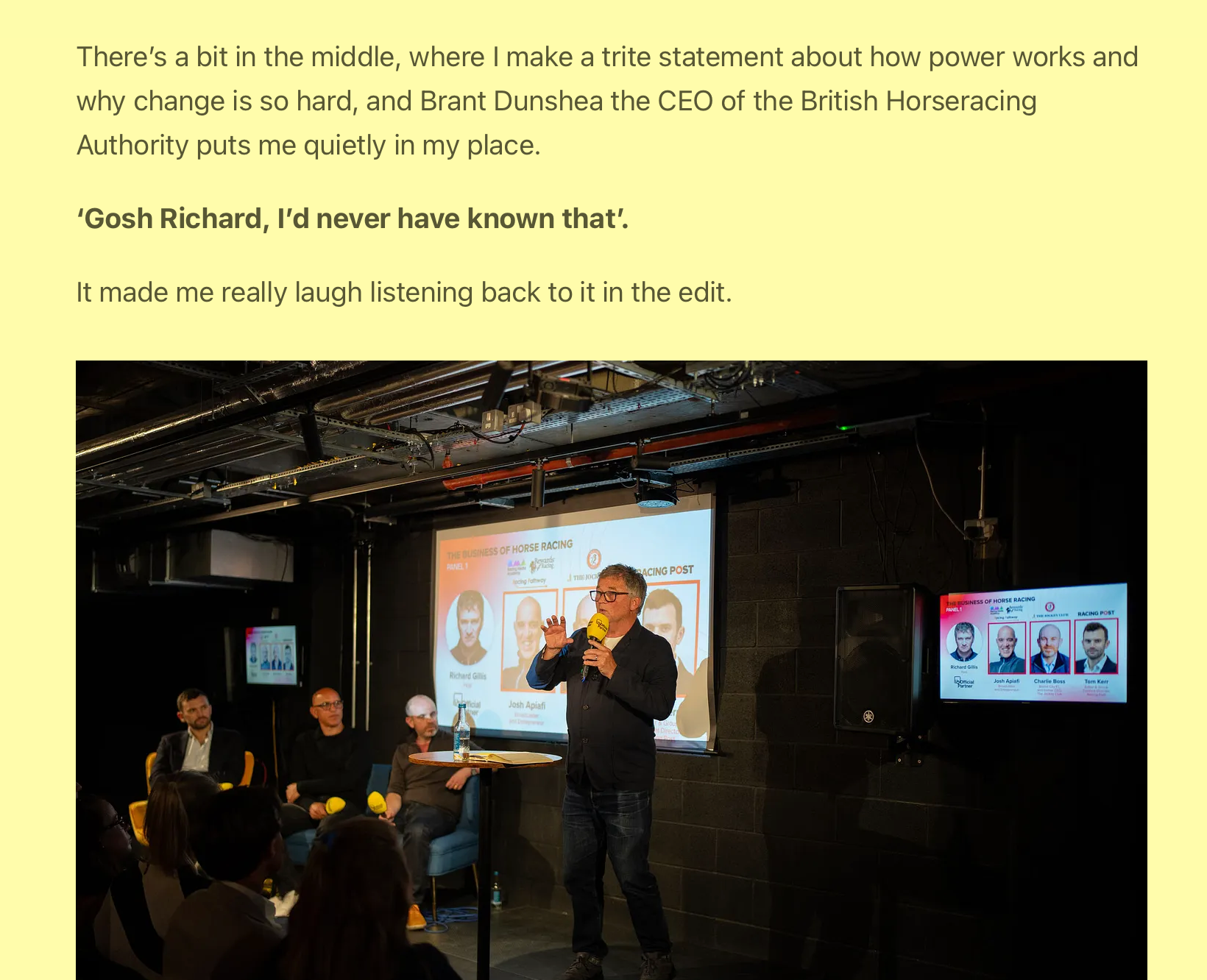
Next month we’re doing an event around Guinness, and it feels similar. It’s what happens when you’ve got a brand of that stature, where the assets and the value have been built — you’d argue mainly in advertising, fantastic award-winning creative — which then lands in the sports arena. That’s a massive advantage they bring to sponsorship. And they can make this joke about Levi’s. It’s an interesting joke about what it tells you about official partnership. We’re sitting here on a podcast called — my mic stand says “Unofficial Partner” — and it’s a joke, a transgressive little joke about the official-partner culture of sport. That’s where it began. That line is an interesting one: where people sit on it, how sponsors feel they can play with it, and how rights holders, for obvious commercial reasons, need to protect it. What do you think, Mike, about the games being played around this?
Mike It’s pointless to compare what you’re doing as an official partner with what you’re doing as an unofficial partner. There are basic ways you can compare the two — you can compare the effectiveness of the marketing strategies and how they deliver against business objectives, and both have to bring creativity. But they’re fundamentally different strategies. It’s like what Nike are doing versus what Adidas are doing. It’s a bit like debating who’s the better athlete, Usain Bolt or Eliud Kipchoge. The drama and spectacle of ten seconds is more interesting than two hours of running — but that doesn’t make one a better or more effective athlete. We want to be growing brands and unlocking value, whether they’re running the 100 metres or the marathon.
Richard Let’s not rehearse the official argument in full, but play it into the scheme of things. The argument for official rights, above all, is access — your article was getting at that. There’s an excitement to the unofficial bit, a frisson to attacking FIFA at this moment, feeling like you’re on the outside, a bit of a maverick. I can see that. We used to say the best idea wins: it doesn’t matter what rights you’ve bought; once it’s out in the world, it’s you against your category opponents, have at it, best idea wins. Does that still ring true? Where’s the official-partner argument now, in the league-table game of who won and who didn’t? Let’s talk about the defences of the official argument, and how robust they are.
Mike There’s a confusing paradox to being the official partner, particularly in the creative and activation space: you’ve got rules imposed on you in a way the unofficial partner doesn’t. The unofficial partner has freedom — isn’t beholden to stakeholders, approval processes, three-player rules and all the rest of it. That’s what makes it complex to compare at that superficial, or at least more creative, level. And then all the other benefits you get as an official partner are the ones that are significantly harder to measure, or that aren’t in the public domain. They are measured — but they’re not shared. So it’s much harder for the public, and for the industry discourse, to compare like for like.
The other thing we see a huge amount of is the demonisation of certain parts of the official rights. “Badging” is one of those words that comes up more and more as something that shouldn’t be done above all else — how dare you just badge, and pay for the right to badge.
Richard Mike’s completely right there. People come on this podcast and say, “Oh, it was just a badging exercise,” or “just a media play,” or “just about awareness” — as though awareness isn’t value. It’s massively valuable. I find it interesting how and why the sponsorship industry gets into these positions. There’s a bit of a thrill to it; I can see the agency side liking the idea of being transgressive. We had Ben from Unilever on, just off the World Cup — they’ve got Sure and Rexona, and the tie there, to your point about distinctive brand assets, is the famous tick. Rexona and Sure appear under different names in different markets, including in America. They’re an official partner of FIFA, and they did the thing with the assistant referee—
Mike The assistant, yes.
Richard —and the tick was on his armpit, so when the clock went up, you saw it. A nice media return — disproportionately more than anything else they spent money on. It gets to the vibes question: the value of vibes, of social-media chatter, of the creator stuff. Because when it comes down to it, the LED boards and the traditional brand assets you’ve bought as a sponsor are still incredibly valuable, and probably what people remember.
Peter If you break it down, there are really only three things you can control. Your investment in the rights — whether you go official or unofficial. How much you invest in activation and the media buy that supports it. And your creative approach. Ideally you combine all three. Some of the “it was just a badging exercise” criticism comes from an observation that some sponsors pay an enormous amount for the rights and then slightly neglect the creativity. There’s a lot of research showing creativity is the second biggest driver of profit and effectiveness, behind the brand itself — so it’s vital it isn’t overlooked, and you can understand why people are protective of it and want to champion fresh creative. But it’s rarely a flash of creative brilliance in isolation that does the job; it needs backing with an arsenal of investment. Which comes back to Mike’s point about comparing official and unofficial: anyone, official or unofficial, who’s had significant attribution with a major tournament has invested significantly in something. In the Levi’s example, an inordinate amount on stadium rights.
Guinness is a good example. Historically they’ve been well associated with the Rugby World Cup even when another beer held the title sponsorship — but only because of decades of Guinness investing in rugby elsewhere, the Six Nations, domestic rugby. That association was already there, which earned them the right to run their own campaigns and activations around the World Cup. They’re not allowed official rights, but it’s their significant investment in the sport, in other facets of it, that earned them the right.
To your point about the industry championing the ambush — that’s something you’d expect, and hope for, from a creative industry: taking the side of the underdog. Especially with this World Cup, with some of what was going on in the background. If a lot of things are being controlled in ways that don’t always feel fair, then good for someone coming in to bend the rules a bit.
Richard The politicisation of the World Cup — FIFA, America at that moment — lent a cultural weight to going against it. People thought it was cooler to be outside that bubble than inside it.
Peter I think so. And part of that couldn’t have been planned or scripted, so there’s an element of fortune for Levi’s. But it’s a perennial thing in the industry: we fetishise the underdog approach, the creative-genius spark that turns the tables through a single flash of brilliance.
Richard It’s the agency argument, isn’t it? “We’ll do the work of the official rights if you spend money with us.” The advertising industry has always put this forward — that an ad campaign is more impactful than sponsorship over time. When you work in a networked agency, you get that friction between the people selling media, the ad creative, and the sponsorship and sports-marketing bit, which is often a bolt-on, or sits within a much bigger play. The levers outside sponsorship are much bigger and stronger. So that creative argument in the sports-marketing discourse has always been driven by the agencies, because that’s what they’re selling.
Mike Without getting into the long and short of it — long-term brand building versus short-term sales — there’s the long versus short term from a sponsorship perspective. Look at Ferran Torres’ winning goal at the World Cup: it’s been clipped and broadcast around the world, and will be for years. It’ll always have Aramco’s logo in the background, behind the goal, rightly or wrongly. That exists for a long period. Compare it with the short-term vibes, where you’re reliant on being in the now — highly contextual communication that creates a short-term spike of relevance and engagement. They’re fundamentally different in that regard, because a lot of activation, by its desire to be contextual and in the now, has no shelf life almost by definition.
Peter There’s also a lag in the industry around effectiveness and evaluation — and I don’t just mean how long it takes to measure things, though that’s true too. The advertising industry has built decades of rigour into its measurement methodologies; there’s a whole industry body, the IPA, whose primary aim is championing effectiveness. So there’s a culture of effectiveness in advertising. There isn’t that same culture in sponsorship — not to the same level. There’s a lot moving in the right direction, but it’s taken longer to adopt those best practices, probably because there’s been an over-emphasis on media value placed on sponsorship rights.
Richard Let me ask you about that — what role does it play? Is it still central? Going back to your article, Mike, you mention the YouGov survey: Pepsi tops the chart as a clear winner with an Ad Impact score of 40.6. I don’t know what that means. Official partner Coca-Cola, meanwhile, scrapes into tenth place with 23.3. What’s that based on?
Mike That’s a YouGov survey — more a pure short-term brand-awareness measure.
Richard A panel of people, what they remember — a basic thing, is it?
Mike Absolutely, yes.
Richard That’s very basic, so let’s not spend too long on it. But this stuff gets into the media and people walk away thinking, “That’s a big number, that’s a small number. They won, they lost.” There’s a binary there that irritates the good people of Coke and Pepsi and everyone else, because it’s so simplistic — a raw Goodhart thing, what gets measured. And then there’s the media-evaluation point you raised, Peter. That’s been a very long-term problem — the argument for sponsorship, the numbers rights holders use to justify the price of the rights. Let’s unpick it, because it gets mentioned a lot, and I’d have thought it would have been dealt with by now. There’s something that keeps it central. We know it’s important—
Peter Yeah.
Richard —very central. Does it get to a failure, is it, of the sponsorship industry to arrive at a more effective measurement system?
Peter There are a few things. First, you need to draw the lines of who’s responsible for what. Rights holders have all the data on reach, exposure, brand association — that has its place, and it’s still important to know. Where media valuation gets problematic is that it’s a calculation where you apply a slightly spurious rate card to what you think the exposure is worth. That’s murky.
Richard On that — from a Guinness perspective, it equates a badge and a logo on the field with the surfing ad. As though those two things are doing the same job. Is that what you’re getting at? Where we see the ads, and all the craft that’s gone into them—
Peter It’s not really a like-for-like comparison. Exposure matters — how many people see it, and for how long — but the conditions are different. When you’re watching a game, you’re not looking out for the LED boards; you’re looking at what’s happening on the pitch. That’s very different from a brilliant, captivating piece of advertising that crops up while you’re on the sofa. So it’s not a fair comparison. But equally, there’s only so much rights holders can measure or contribute to the evaluation. They can do their bit; then the onus is on sponsors, who can bring all their data — sales, how much they’ve invested in the sponsorship and activation. The job of evaluation is bringing the two together. When it’s only a media-value figure, the work hasn’t really been done — and it’s all put in the court of the rights holder, which is slightly unfair, because the sponsor has an enormous amount of the data you need to do the evaluation.
Richard One thing I always wonder — and it gets back to why the IPA’s numbers are more robust, or more trusted, than sport-sponsorship numbers — is that it’s to do with access, and with who’s sharing the information. Unilever knows exactly what happens to its products, and can attribute at a level it is never going to let out of the Unilever house, because that would hand FIFA an advantage the next time the rights come up. So the problem of getting real information about the real impact, in a much broader and deeper way, is counterproductive for the sponsors. You end up with it being sold on a more superficial level, because the evidence sits inside the big companies. We know something good is happening, because they keep doing it and spending a lot of money on it — but what exactly it is, and how it gets templated for elsewhere, is difficult. Is that fair, or am I projecting?
Mike No — though this of all weeks, given what’s been going on in Manchester, is probably one where we’d avoid discussing the actual amounts sponsors are paying rights holders. But as you say, sponsors are never going to—
Richard Just on that — the real valuation of the sponsorship is central to the story, isn’t it, regardless of what else they add on top.
Mike Absolutely. And they’re never going to declare the details of a commercial deal like that — nor, frankly, should they. Which is why it’s probably more interesting to look at some of the other parts of the activation. So many brands and commentators say, “If you’re culturally relevant, it’s a short track to success.” The industry seems obsessed with being culturally relevant, with impacting culture, as a shortcut to success.
Richard What does “culturally relevant” even mean?
Mike It’s one of the first questions I ask whenever I see it in a brief — which is pretty much the top line of every brief nowadays. There’s obviously a desire, quite rightly, for brands to be relevant to the audience they’re trying to engage. But it’s become a buzzword. I summarise it as this generation’s purpose marketing — just as Hellmann’s, ten years ago, wanted to stand against food waste, in a slightly unnecessary way.
Richard Now it’s geopolitics.
Mike Exactly. Nowadays your toothpaste needs to sit at the intersection of sport and culture. It’s rife in the industry, and often it’s laziness that requires unpacking. Culture on its own isn’t enough. Nobody ever sets out to create a campaign that’s culturally irrelevant, so it doesn’t follow that you can just specify a desire to be culturally relevant. What is right is that fandom has evolved, player access has evolved, consumers are interested in many different things, and we’ve got creators who are multi-hyphenates. But that requires digging deeper than culture as an overarching catch-all.
Richard It’s analogous to vibes, isn’t it — this year’s word, bandied around. You get to it like this: if I’m a 45-year-old brand manager at a conglomerate thinking, “I need to be culturally relevant to people 25 years younger than me,” you get to creators — they seem culturally relevant, so I’ll hand my brand over to them. What’s interesting now, Peter, is the questions that raises about what happens to a brand when you hand it to creators — there’s a control question. And the creator world is bifurcating between official and unofficial. You’ve got the NFL, the PGA Tour and others running creator clubs, creator groups, events where creators turn up and do various things — I couldn’t sound more condescending if I tried — but there’s a line now. The audience isn’t stupid; they can see when someone’s been bought and owned. There’s a risk on the creator side of getting too close.
It’s interesting when you lay cultural relevance into the creator question, because they’re earning enormous amounts as a sector. Leaning on the Unilever quote again — he gave us a head-turning number: Unilever looking at shifting 50 to 70% of activation money toward creators. I wonder what the longer-term impact of that might be.
Peter It’s important to remember the creator economy, as we call it, is still relatively young as a media application — everyone’s still figuring it out. It’s only in the last decade that the conversation shifted from “influencer” to “creator.”
Richard It’s a bit of a MySpace thing now, isn’t it — the influencer-to-creator shift. One of the most interesting bits of the—
Peter It was a bit like a Wild West gold rush. Some people surged in very quickly and took what they could, and now there are a few more rules in place. Where best practice is applied with creators, you are handing over the reins to an extent, but there should be two clear sets of parameters everyone’s bought into. First, these are still the brand’s reins — we’ll give you some free space, but you need to work within these parameters. Second, the brand will have chosen a creator because they have a clearly defined audience and way of presenting themselves. A lot of that is driven by algorithms that dictate that creators have to have their distinctive thing, which is then rewarded by the algorithm. So increasingly creators are reinforcing the distinctive-brand-asset idea themselves — this is what they talk about, how they present themselves, their aesthetic. That gives the brand a clearer, more tangible thing to buy into. So there are clearer lines emerging.
Richard The creator bucket. You can see the chain: cultural relevance to vibes to creators, and you think, right, they’re the route to that audience. It’s about audience in the end — if I’m the FA, FIFA, Wimbledon or the US Open, I need to reach these people, and creators have seemed to prove a route to that audience. The brand question is the interesting one: what happens to the brand through that filter. When you look at a World Cup or Rugby World Cup or Six Nations sponsorship, it’s all about control — sponsorship is riddled with control, legal stuff, what you can and can’t do, the territories, the three-player rules, all the palaver that drives agencies and brands mad because it feels so restrictive. But there is control: I can see I’m in control of the brand and the messaging. What happens when you push that into creators, whose whole point is that they’re not rigid in the same way? There’s a freer thing going on. Run the risk of that from a brand’s perspective.
Mike There’s a natural evolution in media and in the most effective use of different channels from a sponsor’s point of view — that’s a different podcast, and one you’ve done, around the US Open and the role of creators, and whether things have to change. Creators are a very effective media channel. They’re not necessarily the creative solution; they’re the media channel. The way you work with them is that they’re creating because they understand their audience, what resonates, their channel and their platform.
Where it gets interesting is when there’s more interplay between the brand and the creator, and the output. There’s an aesthetic now — we as an industry seem to have developed a sports-marketing, culturally-relevant aesthetic where everything almost feels the same. I think of Nike’s “Nothing Beats a Londoner,” first aired in 2018. Brands, rights holders and sponsors have done a version of that in various guises, with an urban aesthetic, leading to a lack of distinction in the marketplace creatively. The bigger concern is that the way the creator economy is going will have created a degree of laziness in creative development and production — in how we then make branded assets.
Richard Let’s pursue that, Peter, because Mike’s right — “everything feels the same” is a much broader thing. My car looks like your car. The wind-tunnel effect: there’s a set of incentives at work here. Do you agree on the sameness? Creativity is supposed to be a response to that, and I wonder if it’s being dated out of the whole thing — whether it’s the algorithm, or the models that promise to measure the effectiveness of creativity, that by definition narrow what creativity is and what it looks like.
Peter There’s probably a timeless thing and a condition of the times we’re in. The timeless thing: look at any creative industry over the centuries and there are clear eras, consistencies and samenesses — in art, music, fashion. Things move through eras and cycles; tropes emerge, get acknowledged, then there’s upheaval and movement to the next thing. That’s nothing new. What exacerbates it now is the pressure from the platforms, from an individual creator’s point of view, to create repeatable formats, because that’s what gets picked up and rewarded by the algorithm. And there’s the body of industry research into the importance of embedding memory structures through creative consistency — but that should apply at an individual level, so it doesn’t mean everyone needs to look the same. A very underappreciated responsibility — whether you’re a creator, a rights holder or a brand — is the ability to spot the tropes, define them, and navigate through them, play off them, find the counterbalance. That in itself is a real skill, and it’s often underappreciated.
Richard When you get to the top end of sport — and we use “sport” as a monolith, but it isn’t; it’s full of different properties, sports and models — at the very top tier, the NFLs and FIFAs of this world, it’s industrialised almost by definition. It’s global marketing machinery you have to live within. Part of the excitement of women’s football initially was that they didn’t have to play that game — there was another game to be played, other ways of being of value to brand partners, telling different stories. One worry a lot of people have is that it’s being subsumed into the men’s game’s machinery and becoming less distinctive — that’s the danger. There’s a whole argument about breaking women’s football out of that, out of FIFA — I’m not getting into the governance questions — about where distinctiveness lives in sport. If a client comes into the office and says, “We’re interested in sport, take me through my options at my price point,” does it all look the same? Is it hard to find distinctive places for them to show up?
Mike It’s improving. Women’s sport — women’s rugby in particular — is something we talk about a lot. The biggest mistake is to try to make things look the same: “It worked in the men’s game, so it should work in the women’s game.” The women’s Lions tour, for example, absolutely shouldn’t follow the same path to the same destinations, because the strengths of different nations in the women’s game are different. Having a different approach means sponsors can support you in a different way. What some of the WSL teams have done superbly is not assume that because something works for one it’ll work for the other. That means you can speak to different partners who want to engage in a way that’s right for that sport, and be proud of what that sport is about, without it needing to be side by side with the men’s game. That’s how it becomes much more interesting for sponsors.
Peter One of the biggest variables is the athlete. Because of how recently women’s sport has grown, you’re starting from a low base, where there wasn’t the access to or appreciation of the athletes as individuals — their incredible backstories, who they are as people. That gives you an enormously rich space to tap into: incredible backstories that haven’t been told yet. It’s an amazing canvas to start with.
Richard We’re going to talk Guinness at some point in November, and I’m really looking forward to it — Guinness and sport is a fascinating area that brings a lot of this together. In the meantime, thanks so much for coming on. Really enjoyed it — a really good conversation. I’ll point people to the article that kicked it off, Mike, so well done on that. We’ll convene in November at Sid Lee’s offices in London. Until then, cheers.
Mike Thank you.
Peter Looking forward to it.