>From those wonderful people who bought you the European Super League
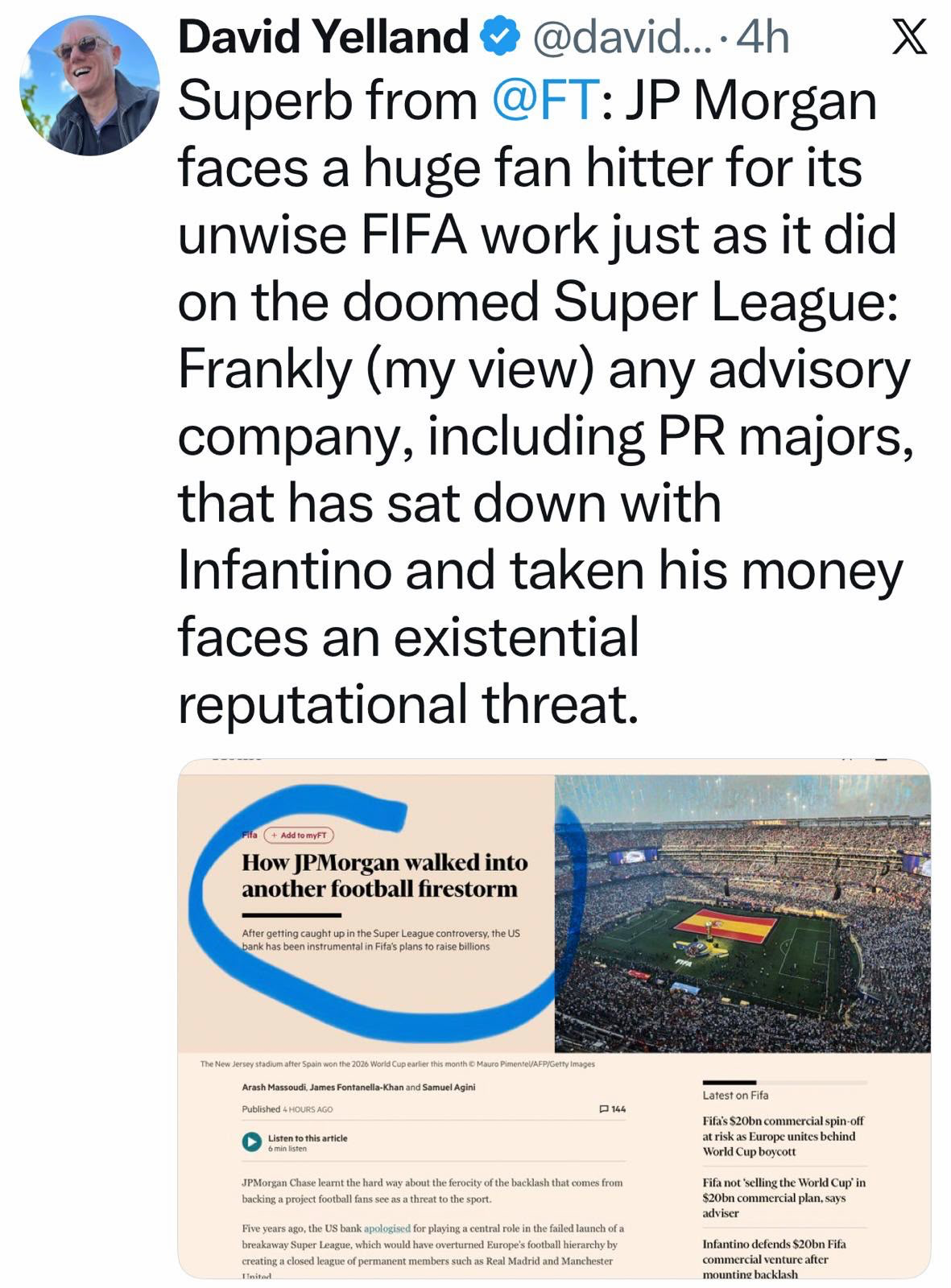
>Gianni Memes
Paddy Power doing their thing
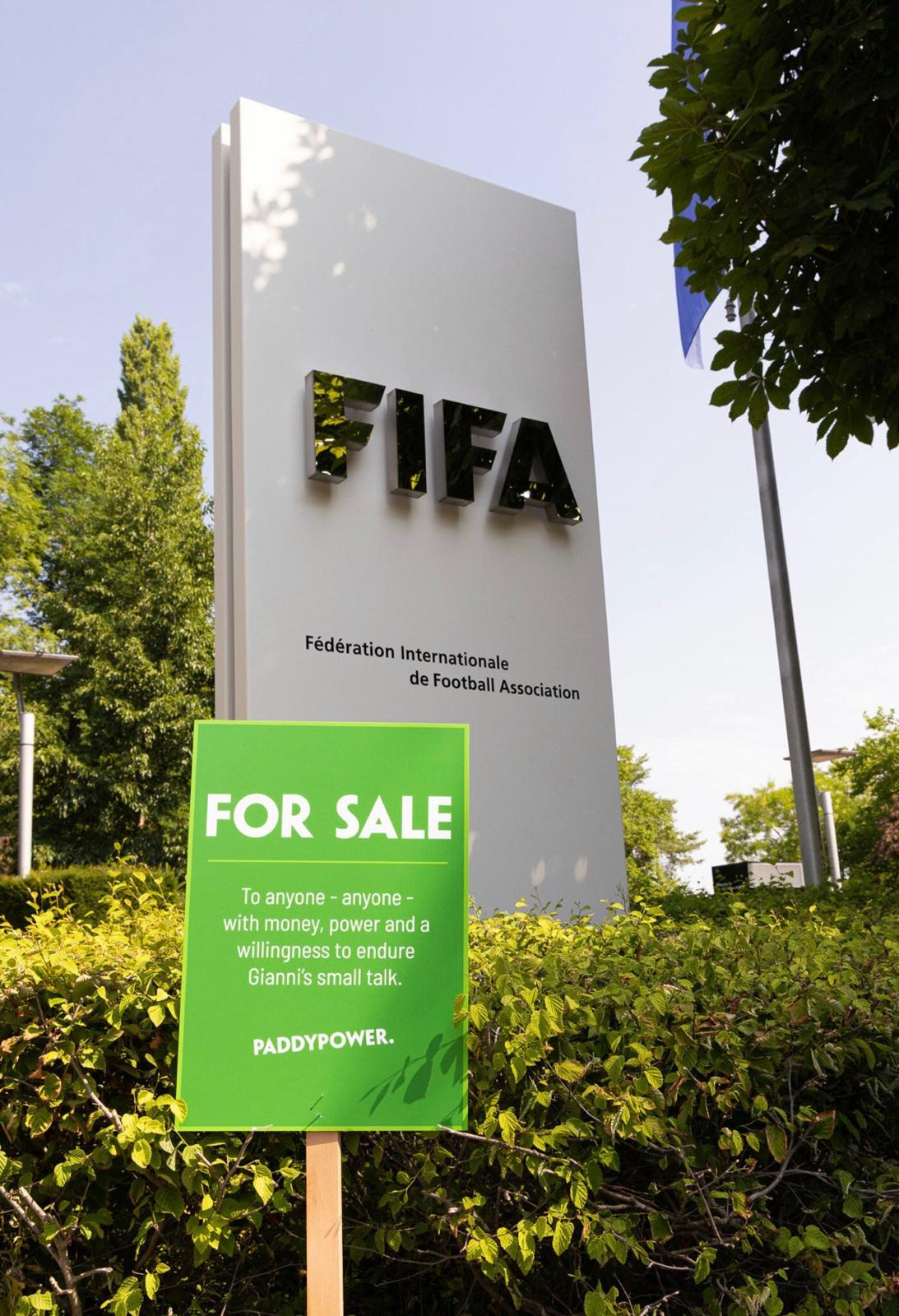
Carlsberg's contribution was so good that I assumed it was AI. The wait for verification felt like a bit like the VAR pause.

Paddy Power doing their thing
Carlsberg's contribution was so good that I assumed it was AI. The wait for verification felt like a bit like the VAR pause.

Charlie Sale was an early guest on Unofficial Partner.
He told a great story about him and the cricketer Ian Bell.
That anecdote appears in the first chapter of Tim Percival's new book.
Tim is a listener to the podcast.
I've no idea whether he took the story from the podcast or heard it from another source.
It's Charlie Sale's story not mine.
He would've told it many times to many people.
We didn't sign exclusive anecdote rights.
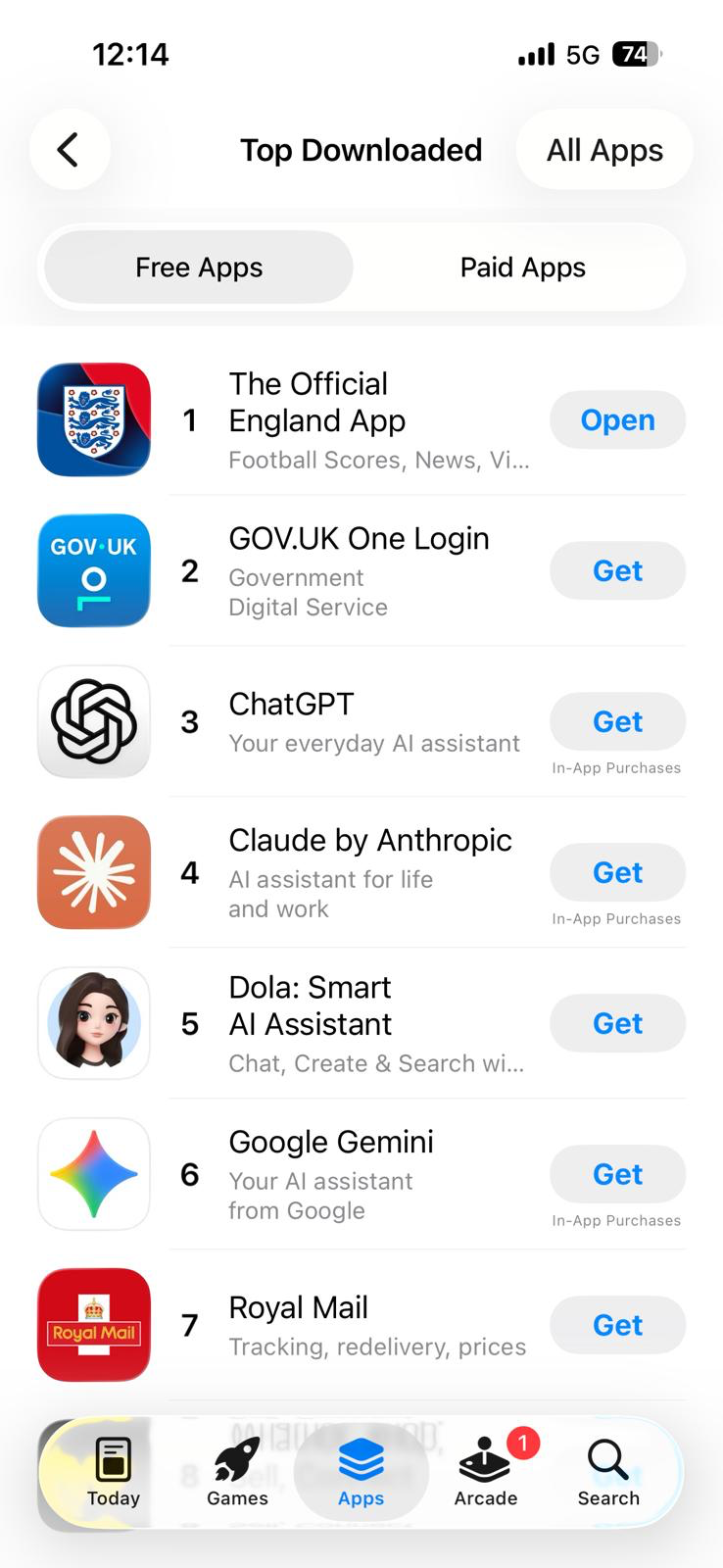
I enjoyed England's World Cup squad reveal.
The film is here:
It was released via The FA's app, which gave it a boost in the upload charts.
Context is king.
Last weekend the St George flag was used to portray a narrow version of Englishness.
I prefer the world The FA is promoting.
See previous note:
 Unofficial Partner
It was the shoe what won it.
Just to be clear, the following copy is taken from a BBC Sport news story, not an Adidas press release:
What shoe did Sawe, Kejelcha and Assefa wear? All three athletes wore Adidas' Adizero Adios Pro Evo 3. The shoe was launched on 25 April, just two days before the world's best took to the streets of London.
It is the third iteration of a hugely popular shoe. Adidas worked with Sawe, Kejelcha and Assefa over the last three years to produce this version of the trainer.
In Sawe's case, it helped him break Kiptum's London course record of 2:01:25 by nearly two minutes. Sawe thanked Adidas for making what he said were best shoes he had worn, particularly highlighting how "very light" and stable they are.
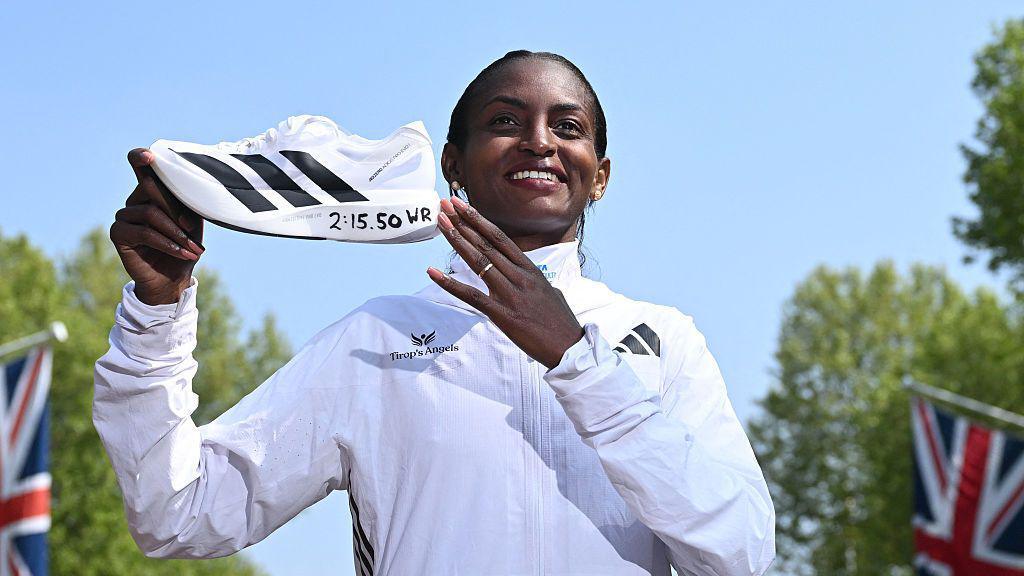
What makes the Pro Evo 3 different? At 99 grams, the trainer is the first 'super shoe' to weigh under 100g. That's lighter than a medium-sized apple, a banana or a bar of soap. In recent years, major improvements in marathon times have been made thanks to the introduction of carbon-plated midsoles. But the Pro Evo 3 instead uses carbon technology - rather than a plate - that wraps around the midsole, helping to maintain running economy and to reduce overall weight.
"At that level, every detail really matters - we were measuring things down to the nearest nanogram," Adidas' VP of running, Patrick Nava, said of the design process. "It was a long process, but it's led to something we believe genuinely changes what a race-day shoe can feel like." For the casual runner taking advantage of the technology comes at a financial cost though. While a limited amount were available this week, a wider release is expected later this year when the shoes will retail at £450.
Enter a liberal's pro-BBC caveat: The BBC is the key broadcast rights holder of the London Marathon, and it's fantastic at it. A wonderful celebration of humanity that fits perfectly with the national broadcaster.
But it is the wrong time to do a deep dive on Adidas shoes that won the race and broke the two-minute record, the two-hour marathon record.
BBC news shouldn't be a cheerleader, it should be a news outlet.
When in doubt, blame the Americans
See previous post: What's the difference between ESPN and the NFL?
We recorded a live podcast last week at MSQ Sport and Entertainment in Covent Garden, to mark the launch of At Last, Callaway Golf's new brand film, a way in to a conversation about the state of the golf business as we head in to The Masters, the first major of the season. The film captures the mood nicely.
A golf ad that doesn't feature the product...Bolshevism!